Summary
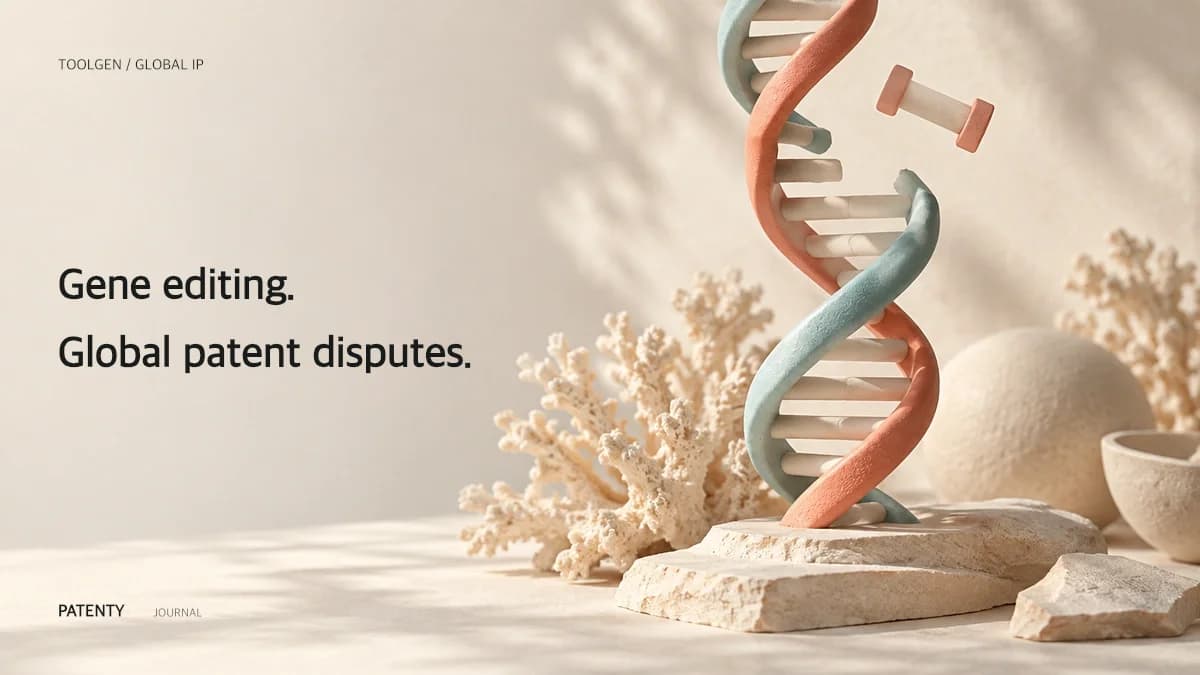
The decade-long battle over CRISPR-Cas9 gene-editing technology has entered a critical new phase. South Korea's ToolGen has recently secured major patent registrations in the U.S. and Europe while gaining a favorable position in the Unified Patent Court (UPC), potentially forcing industry giants into a massive licensing settlement.
The Event
In late 2025 and early 2026, ToolGen achieved a series of decisive legal milestones. The European Patent Office (EPO) and the United States Patent and Trademark Office (USPTO) approved registrations for ToolGen’s CRISPR-Cas9 Ribonucleoprotein (RNP) delivery technology. Simultaneously, international IP circles are closely monitoring the UPC’s multi-national injunction precedents, where ToolGen is positioned to challenge the current hegemony of the Broad Institute (Harvard/MIT) and the CVC Group (UC Berkeley).
Context
The CRISPR patent landscape is notoriously complex. While the initial battle focused on who first applied CRISPR to eukaryotic cells (human/animal), the second wave, where ToolGen is a primary player, concerns the RNP delivery method. Delivering the Cas9 protein and guide RNA as a pre-assembled complex (RNP) is widely considered safer and more efficient for clinical applications than using viral vectors.
- The US Interference: ToolGen is currently engaged in interference proceedings (No. 106,126 and 106,127) at the PTAB, where it has been designated as the 'Senior Party' in specific contexts, placing the burden of proof on its rivals.
- The European Pivot: With the EPO granting ToolGen's RNP patents, the company now holds the power to block or tax therapies entering the European market.
Implications
For IP practitioners, this case highlights three critical strategic shifts:
- UPC Leverage: The Unified Patent Court now allows for cross-border injunctions across most of Europe with a single ruling. If ToolGen succeeds in a UPC infringement action, it could effectively shut down the distribution of CRISPR-based drugs like CASGEVY® in multiple territories simultaneously.
- FTO (Freedom to Operate) Risks: Biopharma companies that previously licensed from only Broad or CVC must now reassess their risk. ToolGen’s patents specifically cover the RNP format, which is the standard for modern ex vivo therapies.
- Substantive vs. Procedural Wins: ToolGen’s success shows the importance of maintaining 'early' priority dates across multiple jurisdictions to survive the transition from First-to-Invent to First-to-File systems.
Outlook
The industry is watching whether ToolGen will pursue a 'global settlement' or engage in protracted litigation against the developers of approved therapies. As more CRISPR-based treatments move toward FDA and EMA approval, the 'ToolGen factor' is no longer a peripheral legal curiosity but a central commercial reality. Patent professionals should watch the UPC’s upcoming preliminary injunction rulings, as they will set the tone for how biotech SEPs (Standard Essential-like Patents) are treated in the gene-editing era.