
IP News
The CRISPR Patent Landscape Shifts: ToolGen’s Global Offensive and the Casgevy Infringement Litigation
•
7 min read
•Views 2,631

The long-standing 'CRISPR patent wars' have entered a volatile new phase. Following recent patent grants in both the European Patent Office (EPO) and the USPTO, South Korean biotech firm ToolGen has launched aggressive infringement litigation against Vertex Pharmaceuticals and CRISPR Therapeutics. This move targets Casgevy® (exagamglogene autotemcel), the world's first FDA-approved CRISPR-based gene therapy. For IP professionals, this case represents a critical shift from theoretical interference proceedings to commercial enforcement with billions of dollars in royalties at stake.
In recent months, ToolGen has successfully secured key intellectual property related to CRISPR-Cas9 Ribonucleoprotein (RNP) technology in major global jurisdictions. In Europe, the EPO granted a patent covering the introduction of CRISPR-Cas9 RNPs into mammalian cells, a method that is widely considered more efficient and less prone to off-target effects than traditional DNA-based delivery. Simultaneously, the USPTO issued similar claims, providing ToolGen with the legal ammunition to take action in the United States.
With these assets in hand, ToolGen filed an infringement lawsuit in the U.S. District Court for the District of Delaware against Vertex Pharmaceuticals and CRISPR Therapeutics. The complaint alleges that the manufacturing process for Casgevy®, which utilizes CRISPR-Cas9 technology to treat sickle cell disease and beta-thalassemia, infringes upon ToolGen's foundational RNP patents. This litigation matters beyond the parties involved: it is the first major enforcement action against a commercially approved CRISPR product.
The CRISPR IP landscape has historically been dominated by the 'CVC group' (University of California, University of Vienna, and Emmanuelle Charpentier) and the Broad Institute (MIT/Harvard). However, ToolGen has remained a 'dark horse' in this race, maintaining an early priority date of October 23, 2012, preceding many of the key filings by the Broad and CVC groups in specific technological nuances.
ToolGen’s focus on RNP delivery is technically distinct. While early CRISPR research often utilized plasmids or viral vectors to deliver the gene-editing machinery, RNP delivery (pre-assembled Cas9 protein and guide RNA complexes) offers immediate action and rapid degradation, which minimizes the risk of unwanted genomic alterations. As the industry has moved toward RNP as the gold standard for clinical applications, ToolGen’s strategic patenting of this specific modality has placed it in a position of unexpected strength.
For patent attorneys and IP counsel, this case is a stark reminder that FTO is never static. Companies that focused solely on the outcome of the Broad vs. CVC interference proceedings may have overlooked secondary players like ToolGen. Global IP teams must now re-evaluate their portfolios and development pipelines against ToolGen’s newly granted claims in Europe and the US.
This litigation highlights that how the gene is edited is as patentably significant as the editing tool itself. For biotech practitioners, the focus must expand beyond the Cas9 protein sequence to the specific formulation and delivery methods (RNP, LNP, etc.) that enable clinical use.
ToolGen’s simultaneous success in the EPO and USPTO demonstrates a sophisticated global strategy. Legal ops teams should note the efficiency of using consistent technical narratives across different patent offices to build a unified global enforcement front.
The industry is watching whether this will lead to a 'Patent Pool' or a series of massive licensing deals. Vertex and CRISPR Therapeutics have significant resources, but the threat of an injunction (or a court-ordered royalty on a therapy costing $2.2 million per patient) gives ToolGen substantial leverage.
The outcome of this case will set the precedent for how foundational IP holders will collect 'tolls' from the next generation of genomic medicines.

IP Insights
Lawhive’s $60M Series B validation signals a divergence in the legal AI market: while Harvey and Legora compete for enterprise SaaS dominance, the "full-stack" model is beginning to disrupt the service delivery layer itself.
IP Insights
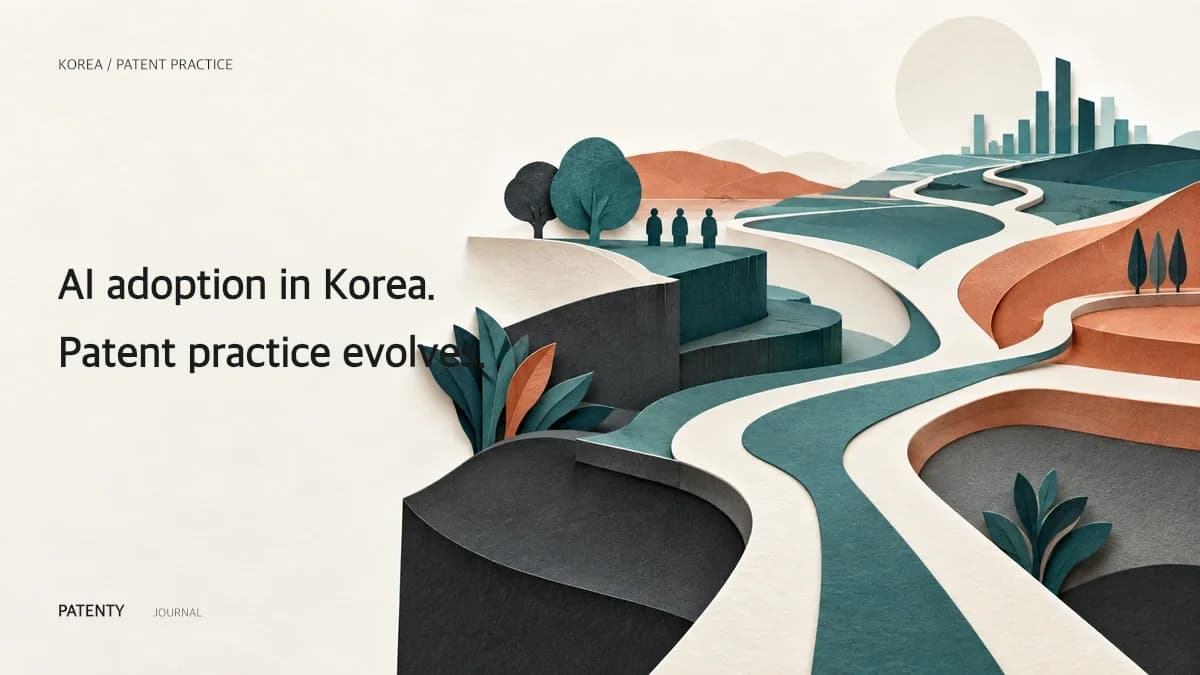
South Korea’s rapid ascent to 18th in global AI adoption correlates with critical KIPO regulatory shifts. This analysis explores the operational necessity of AI integration for patent attorneys facing semantic search-equipped examiners.

IP Insights
A self-compiled corpus of 1,168 KIPTAB decisions shows a 59.8% invalidation rate, with inventive step driving 80.2% of attacks. The 15.5-percentage-point drop from 2020 to 2025 signals that the specification you file today faces a stricter post-grant tribunal five years later. This article translates the data into concrete drafting and portfolio hedges for Korean filers.